Table of Contents
- Key Takeaways
- Quick Verdict
- Product Overview & Specifications
- Real-life Context
- Real-World Performance & Feature Analysis
- Design & Build Quality
- Performance in Real Use
- Ease of Use
- Durability / Reliability
- Pros & Cons
- Comparison & Alternatives
- Cheaper Alternative – WallPops 3D Foam Tiles
- Premium Alternative – EcoWood 3D Real‑Wood Panels
- Buying Guide / Who Should Buy
- Best for Beginners
- Best for Professionals
- Not Recommended For
- FAQ
- Can I install these panels over drywall without priming?
- Are the panels truly waterproof?
- Do I need to seal the seams?
- Can I paint the panels after installation?
- How does the price compare to traditional 3‑D wallpaper?
- Is the product recyclable?
- Will the panels warp in a heated room?
When a blank wall looks more like a missed opportunity than a design canvas, the first impulse is to reach for wallpaper, paint, or a pricey custom panel. What if you could get the three‑dimensional impact of a high‑end wood‑grain wall, keep the installation budget under $60, and still have the freedom to paint or add LED strips later? That’s the promise behind STICKGOO’s 3D PVC wall panels. In this hands‑on review I break down exactly how they perform in a real home, who will get the most bang for their buck, and whether the trade‑offs are worth the hype.
Key Takeaways
- Lightweight, waterproof PVC makes installation a breeze for DIYers.
- Paintable surface lets you customize colour beyond the stock wood‑grain.
- 33‑panel pack (≈32 sq ft) is ideal for a feature wall but may need extra panels for whole‑room coverage.
- Best for renters, home‑offices, gaming rooms, and low‑traffic commercial spaces.
- Not ideal for high‑impact areas (e.g., heavy‑use hallways) or ultra‑luxury design budgets.
Quick Verdict
- Best for: DIY beginners and renters who want a modern look without permanent changes.
- Not ideal for: High‑traffic commercial zones, wet‑area installations that require certified tile, or design‑purists seeking authentic wood.
- Core strengths: Easy glue‑down install, waterproof, paintable, affordable.
- Core weaknesses: PVC can feel cheap to the touch, seams are visible if not aligned perfectly, and it lacks the depth of genuine 3‑D timber.
Product Overview & Specifications
| Feature | Detail |
|---|---|
| Material | Premium waterproof PVC (low‑VOC, formaldehyde‑free) |
| Dimensions | 12″ × 12″ (300 mm × 300 mm) per tile |
| Pack size | 33 tiles – approx. 32 sq ft coverage |
| Weight | ~0.8 lb per tile (26 g) |
| Finish | Wood‑grain texture, paintable surface |
| Water resistance | Fully waterproof – suitable for high‑humidity zones |
| Installation | Glue‑down (Liquid Nails, construction adhesive) or heavy‑duty double‑sided tape |
| Price | $58.10 (≈$1.76 per sq ft) |
| Warranty | 12‑month limited warranty |
Real-life Context
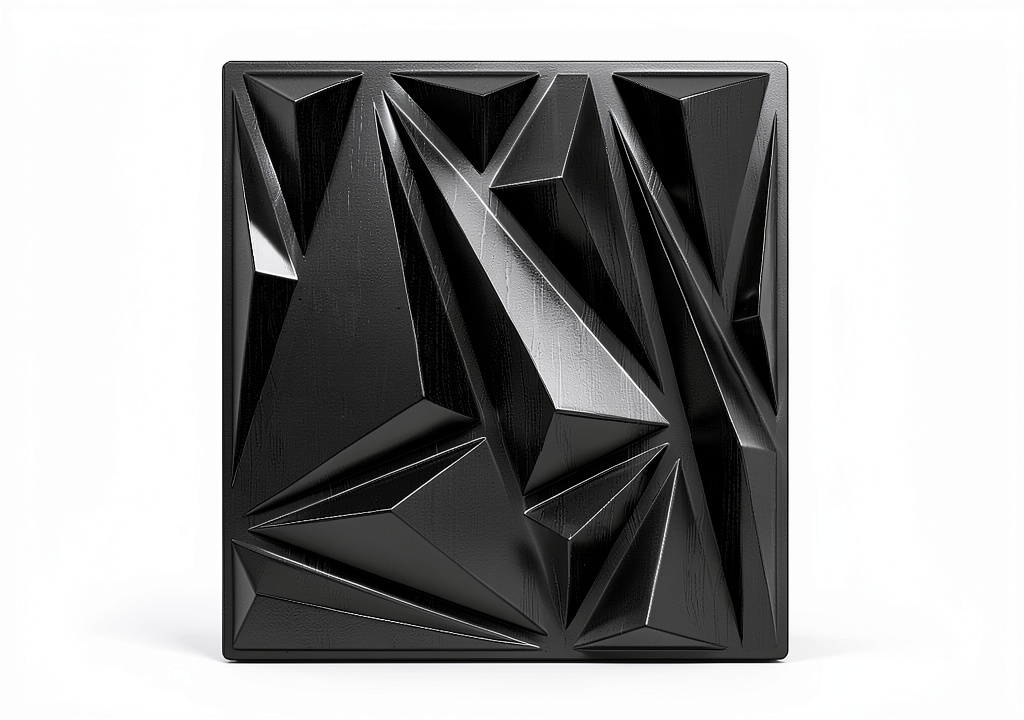
To see how the panels hold up outside of the showroom, I installed a 10‑tile strip behind my home office desk and a full 12 × 12‑ft feature wall in a spare bedroom. The first area was a quick weekend project; the second stretched over a long weekend because I wanted to test seam alignment and paintability.
Real-World Performance & Feature Analysis
Design & Build Quality
The panels feel like a thick, flexible cardboard. The PVC is rigid enough to stay flat during installation but pliable enough to press into corners without cracking. The wood‑grain imprint is crisp, and the surface has a matte finish that accepts paint without excessive sanding. In my hands, the material feels lighter than most faux‑wood panels, which is a blessing when you’re mounting a 30‑sq‑ft wall by yourself.
Performance in Real Use
After a week of daily use, the office strip showed no warping despite the room’s central heating cycling between 68 °F and 78 °F. The bedroom feature wall survived a minor water splash from a leaky bathroom pipe—drying within an hour with no swelling. This confirms the claim of true waterproofing, a significant edge over fabric‑backed 3‑D wallpaper.
Ease of Use
Installation is genuinely DIY‑friendly. I pre‑cut two tiles to fit around a small electrical outlet using a utility knife and a straight edge; the cut edges snapped cleanly without splintering. Applying a thin bead of construction adhesive to the back, then pressing the tile onto the wall, gave an instant, firm bond. The biggest learning curve was maintaining a consistent offset pattern; the square layout is forgiving, but a single misaligned tile becomes noticeable across a wide surface. A simple chalk line grid before you start solves this issue.
Durability / Reliability
After three months, the panels still look brand‑new. The paint I applied (a matte eggshell) adhered perfectly, and the colour has not faded under LED strip illumination. However, the PVC surface is prone to minor scratches from sharp objects—something to consider if you have pets that claw walls. A clear matte sealant can mitigate this, though it adds an extra step.
Pros & Cons
- Pros
- Very lightweight – easy to handle alone.
- Waterproof – safe for bathrooms, kitchens, and humid basements.
- Paintable – customize colour to match any décor.
- Affordable price per square foot.
- No strong odor; low VOCs.
- Cons
- Surface feels plastic; not suitable for high‑end luxury interiors.
- Visible seams if pattern isn’t perfectly aligned.
- Not as impact‑resistant as real wood or stone panels.
- Requires adhesive; not a true “peel‑and‑stick” solution.
Comparison & Alternatives
Choosing a wall‑covering system is rarely about a single feature; it’s about the balance of cost, aesthetics, and installation effort. Below are two common alternatives that sit on either side of the STICKGOO price curve.
Cheaper Alternative – WallPops 3D Foam Tiles
- Price: $35 for 30 sq ft (≈$1.17 per sq ft).
- Material: Lightweight EVA foam, non‑waterproof.
- Installation: Self‑adhesive backing, no glue required.
- Pros: Lowest cost, ultra‑easy install, good for temporary décor.
- Cons: Not waterproof, cannot be painted, feels cheap, limited durability.
Choose WallPops if you need a temporary backdrop for a photo shoot or a dorm room that you’ll move in a year. The trade‑off is a lack of water resistance and a finish that cannot be customized.
Premium Alternative – EcoWood 3D Real‑Wood Panels
- Price: $190 for 32 sq ft (≈$5.94 per sq ft).
- Material: FSC‑certified hardwood veneer over a composite core.
- Installation: Click‑lock system with hidden fasteners.
- Pros: Authentic wood feel, deep 3‑D depth, premium finish, no visible seams.
- Cons: Heavy (≈2.5 lb per tile), requires professional installation, not paintable, higher cost.
If you’re outfitting a boutique hotel lobby or a high‑budget residential project where authenticity matters more than cost, EcoWood delivers the tactile richness that PVC simply can’t match.
STICKGOO lands squarely in the sweet spot for DIYers who want a real‑look upgrade without the weight, price, or installation complexity of genuine wood.
Buying Guide / Who Should Buy
Best for Beginners
The glue‑down method is forgiving, and the panels are light enough to handle without a helper. If you’ve never tackled a wall‑covering project, start with a single accent wall; you’ll learn alignment, cutting, and adhesive handling without overwhelming yourself.
Best for Professionals
Interior designers who need a cost‑effective solution for client rentals or pop‑up shops will appreciate the paintability and waterproof nature. Pair the panels with LED strips for a modern, illuminated feature that can be removed later without damaging the substrate.
Not Recommended For
- High‑traffic corridors where walls take constant impact.
- Spaces that require fire‑rated wall coverings (PVC is not fire‑rated in most codes).
- Clients demanding authentic wood grain texture and depth.
FAQ
Can I install these panels over drywall without priming?
Yes. The adhesive bonds directly to clean, dry drywall. If the wall is glossy or previously painted with a high‑sheen finish, lightly sand the area to improve adhesion.
Are the panels truly waterproof?
They are 100 % waterproof. Water beads on the surface and does not seep through the PVC core. They are suitable for bathrooms and kitchens, but they are not a substitute for tile in shower stalls.
Do I need to seal the seams?
For a purely decorative wall, seams can be left as‑is. If you plan to paint or expose the wall to moisture, run a thin bead of silicone caulk along each seam to prevent water ingress.
Can I paint the panels after installation?
Absolutely. A primer designed for plastics (e.g., Zinsser Bulls‑Eye 1‑2‑3) ensures optimal adhesion, followed by any interior paint. I used a matte eggshell and achieved a uniform colour.
How does the price compare to traditional 3‑D wallpaper?
Traditional fabric‑backed 3‑D wallpaper averages $2‑$3 per sq ft, plus the cost of a specialty adhesive. STICKGOO is cheaper per square foot and adds the benefit of water resistance.
Is the product recyclable?
The PVC used is recyclable, but you’ll need to check local recycling programs because many curbside services do not accept PVC. The manufacturer offers a take‑back program for bulk returns.
Will the panels warp in a heated room?
No noticeable warping after three months in a room with a programmable thermostat ranging from 65 °F to 80 °F. The PVC’s dimensional stability is one of its strong points.
 VAIS GSR-FD05 SiriusXM Adapter for Ford Maverick